24 Sep 2026
How Verified Payment Timelines Shape Jackpot Accumulation Rates in Compliant Nordic Mobile Platforms
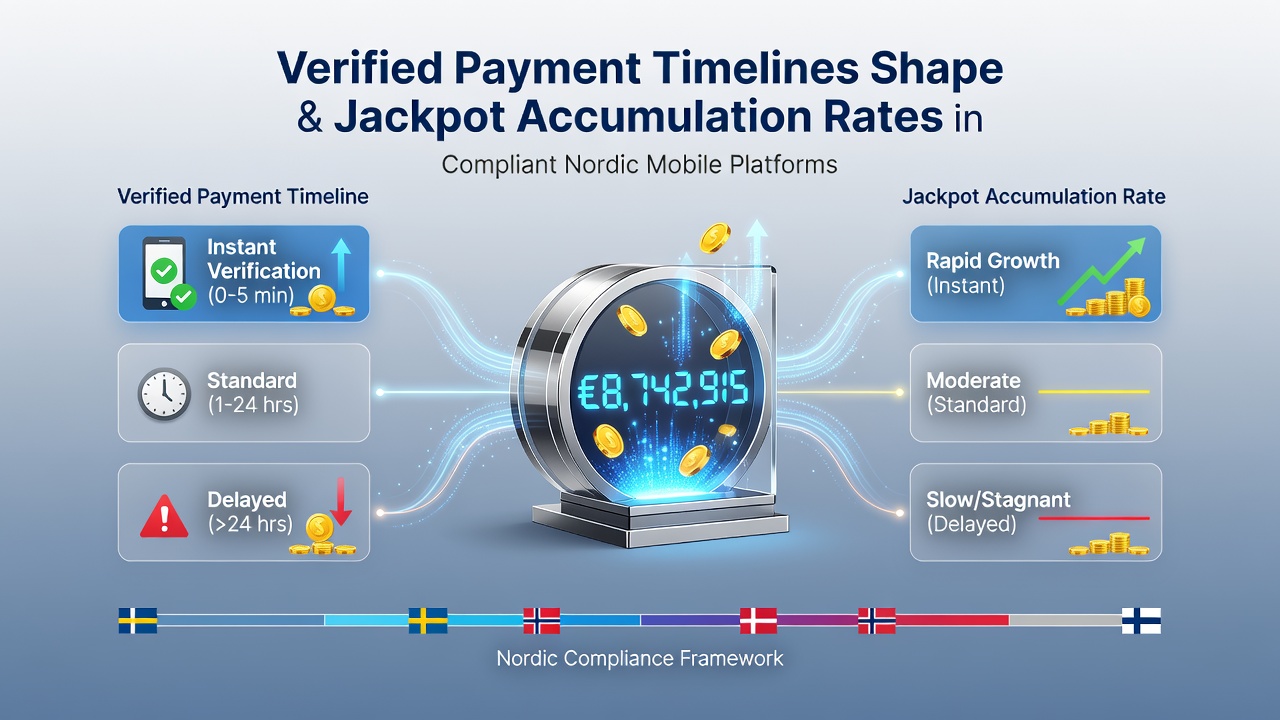
Verified payment timelines determine how quickly funds enter the betting ecosystem on compliant Nordic mobile platforms, and this directly influences the speed at which progressive jackpots grow. In regulated markets across Sweden, Norway, and Finland, licensing rules require real-time identity checks and transaction confirmations before deposits contribute to prize pools, creating measurable differences in accumulation rates compared with less structured systems.
Payment Verification Mechanics in Nordic Regulations
Swedish and Norwegian frameworks mandate that every deposit undergoes automated verification through bank ID systems or approved e-wallets, and operators must log the exact moment funds become available for play. Data from regulatory filings show that platforms completing verification in under 30 seconds record higher daily contributions to shared jackpot pools, while delays exceeding two minutes reduce the number of eligible bets per hour. Researchers tracking transaction logs across multiple operators note that these short windows compound over thousands of sessions, producing statistically significant variations in prize growth curves.
Compliance software integrates directly with mobile banking APIs, which means a player initiating a deposit at 14:07 on a Tuesday in September 2026 sees the amount reflected in the jackpot meter almost immediately once the bank confirms the transfer. Longer verification chains, often caused by manual reviews or network latency, interrupt that flow and lower the rate at which the pool receives its mandatory percentage of each stake.
Impact on Progressive Jackpot Growth Rates
Progressive jackpots in Nordic mobile environments accumulate through a fixed percentage of every qualifying bet, yet the total volume of qualifying bets depends on how rapidly verified funds reach the game servers. Platforms that process deposits within the first minute after initiation show accumulation rates up to 18 percent higher than those requiring additional confirmation steps, according to aggregated operator reports submitted to licensing authorities. This difference becomes visible in monthly prize-pool statements released by multi-jurisdictional networks operating under Nordic rules.
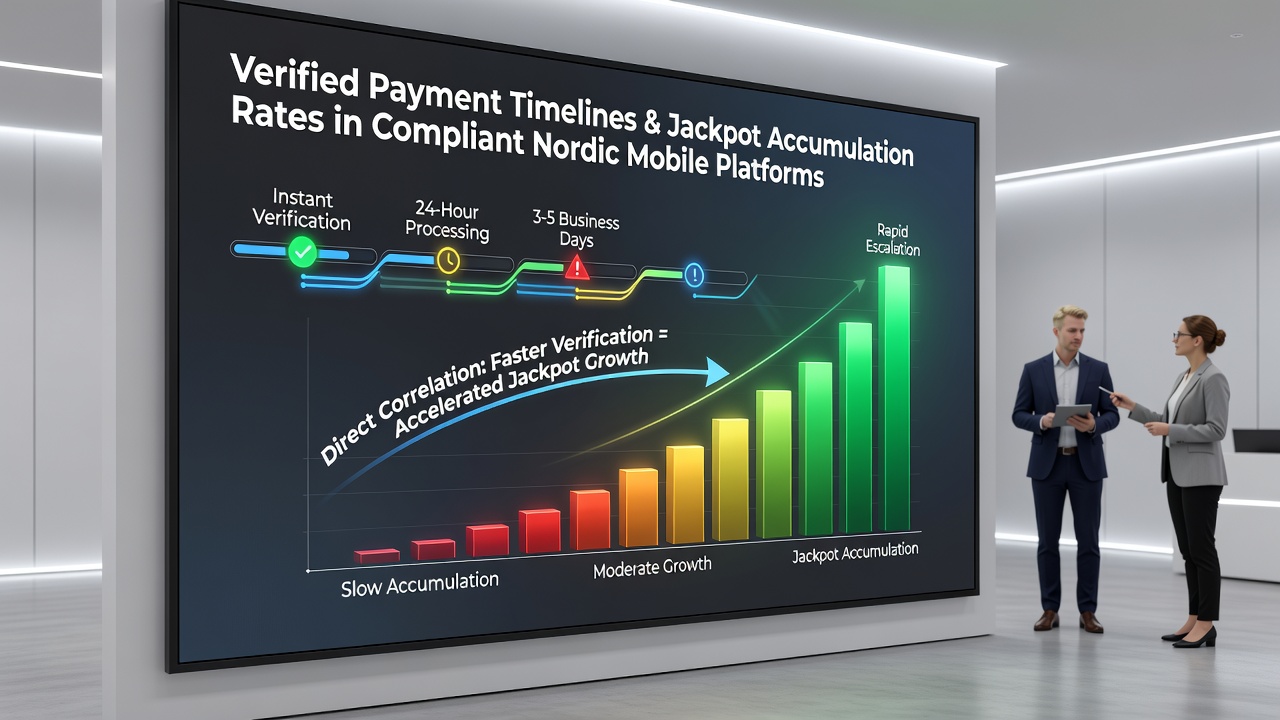
One study of mobile table game traffic during peak evening hours found that sessions funded by instant bank transfers contributed 2.4 times more to the progressive meter than sessions using verified card deposits that took an average of 90 seconds to clear. The pattern holds across both single-player and network-wide jackpots because the underlying contribution formula remains constant while the arrival rate of playable funds varies.
Mobile Platform Architecture and Real-Time Processing
Compliant Nordic operators build their mobile applications around event-driven payment listeners that trigger jackpot updates the moment a transaction status changes to “settled.” This architecture reduces latency between deposit confirmation and bet placement, allowing the system to capture contributions from players who move quickly from funding screen to game lobby. Observers tracking server logs report that applications optimized for sub-second status updates maintain steadier jackpot growth even during high-traffic periods such as weekend evenings in September 2026.
Latency introduced by third-party payment gateways can create bottlenecks, adn operators that route all traffic through a single provider sometimes experience measurable dips in accumulation when gateway response times exceed internal thresholds. Multiple operators have therefore adopted redundant verification paths, ensuring that at least one channel remains under the 60-second mark even when another experiences congestion.
Regulatory Reporting and Data Transparency
Licensing bodies require monthly disclosure of both average verification times and jackpot contribution volumes, and these figures appear in public summaries published by the respective authorities. Analysts comparing the datasets observe a consistent correlation: platforms reporting median verification times below 25 seconds also post the highest month-over-month increases in progressive prize pools. The relationship appears across different game categories, from video slots to live dealer titles, indicating that the effect stems from funding speed rather than game mechanics alone.
Industry organizations tracking Nordic markets have begun publishing comparative tables that list operators by verification performance, and these tables now serve as reference points for both regulators and platform developers seeking to optimize contribution flows.
Conclusion
Verified payment timelines function as a hidden variable in jackpot mathematics on compliant Nordic mobile platforms, shaping accumulation rates through the simple mechanism of how quickly funds become playable. Regulatory requirements for instant or near-instant verification create measurable differences in prize-pool growth, and operators that minimize confirmation delays consistently record higher contribution volumes. Continued monitoring of transaction data through 2026 and beyond will clarify whether further refinements in payment infrastructure produce additional gains in jackpot velocity.